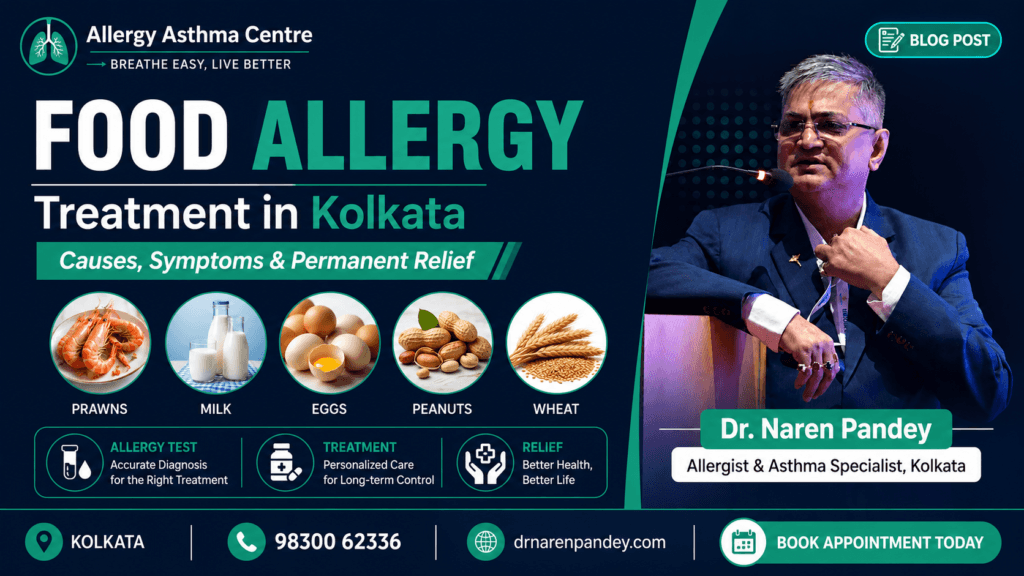
Food Allergy Treatment in Kolkata: Causes, Symptoms & Permanent Relief | Dr. Naren Pandey
By Dr. Naren Pandey | Allergist & Asthma Specialist, Kolkata
Did you ever eat prawns at a family dinner and suddenly develop itchy skin, hives, or stomach cramps? Or perhaps your child gets a runny nose and watery eyes every time they drink milk? These reactions could be signs of food allergy — one of the most common yet most misunderstood allergic conditions affecting patients in Kolkata.
At the Allergy Asthma Centre, Dr. Naren Pandey has helped hundreds of food allergy patients in Kolkata identify their exact trigger foods and get effective, long-term relief. This complete guide explains what food allergy is, what causes it, and how to treat it permanently.
What Is Food Allergy?
Food allergy is an immune system reaction that occurs when the body mistakenly identifies a food protein as harmful. The immune system produces IgE antibodies against the food, and the next time that food is eaten, these antibodies trigger the release of histamine and other chemicals — causing allergic symptoms.
Food allergy is different from food intolerance. Food intolerance (like lactose intolerance) causes digestive discomfort but does not involve the immune system and is not life-threatening. True food allergy can cause severe, potentially life-threatening reactions.
Common Food Allergens in Kolkata
While food allergy can be triggered by any food, certain foods are responsible for the vast majority of reactions. In Kolkata, given the Bengali diet and food culture, these are the most common triggers:
The “Big 8” Food Allergens:
1. Seafood & Fish (most common in Bengal)
- Prawns (chingri) — the most common food allergen in Kolkata
- Hilsa (ilish), rohu, catfish, and other fish
- Crabs, lobsters, and shellfish
- Dried and fermented fish
2. Milk & Dairy Products
- Cow’s milk — very common in children
- Paneer, cheese, butter, and curd
- Ice cream and milk-based sweets (mishti)
3. Eggs
- Egg white is more allergenic than egg yolk
- Hidden in baked goods, mayonnaise, and processed foods
4. Peanuts
- One of the most potent food allergens worldwide
- Can cause severe anaphylaxis even in tiny amounts
- Hidden in many snacks and sweets
5. Tree Nuts
- Cashews (kaju), almonds (badam), walnuts
- Common in Bengali sweets and desserts
6. Wheat
- Found in bread, roti, pasta, and most packaged foods
- Wheat allergy is different from celiac disease
7. Soy
- Found in many processed and packaged foods
- Common in vegetarian protein supplements
8. Mustard (Sarson)
- Widely used in Bengali cooking — mustard oil, mustard paste
- A recognised food allergen that is often overlooked in Kolkata
Other Common Triggers in Kolkata:
- Brinjal (baingan) — surprisingly common trigger
- Tomatoes — can trigger histamine release
- Citrus fruits — oranges, lemons
- Fermented foods — pickles, fermented fish
Symptoms of Food Allergy
Food allergy symptoms can range from mild to life-threatening. They typically appear within minutes to 2 hours of eating the trigger food:
Skin Symptoms:
- Hives (urticaria) — raised, red, itchy welts
- Eczema flare-ups
- Swelling of the lips, face, or tongue (angioedema)
- Flushing or redness of the skin
Digestive Symptoms:
- Nausea and vomiting
- Stomach cramps and pain
- Diarrhoea
- Bloating
Respiratory Symptoms:
- Runny or blocked nose
- Sneezing
- Wheezing or difficulty breathing
- Throat tightening
Cardiovascular Symptoms:
- Dizziness or lightheadedness
- Rapid heartbeat
- Drop in blood pressure
⚠️ Anaphylaxis — Medical Emergency: Anaphylaxis is a severe, life-threatening allergic reaction that can cause:
- Sudden throat swelling — blocking the airway
- Severe breathing difficulty
- Rapid drop in blood pressure
- Loss of consciousness
Call emergency services immediately if anaphylaxis is suspected.
Food Allergy vs Food Intolerance: Key Differences
| Feature | Food Allergy | Food Intolerance |
|---|---|---|
| Immune system | Yes — IgE mediated | No |
| Amount needed | Even tiny amounts | Usually large amounts |
| Reaction speed | Within minutes–2 hours | Hours to days |
| Life-threatening | Yes — anaphylaxis possible | No |
| Skin reactions | Yes | Rarely |
| Diagnosis | Skin Prick Test + IgE | Elimination diet |
| Treatment | Immunotherapy possible | Avoidance only |
How Is Food Allergy Diagnosed in Kolkata?
At Allergy Asthma Centre, Dr. Naren Pandey uses a systematic approach to diagnose food allergy accurately:
1. Detailed Clinical History Dr. Naren Pandey carefully reviews your symptoms — what you ate, when the reaction occurred, how long it lasted, and whether it has happened before. This is the foundation of food allergy diagnosis.
2. Skin Prick Test (SPT) The most accurate test for food allergy. A panel of food allergens — including seafood, egg, milk, wheat, nuts, mustard, and soy — is tested on the forearm skin. A raised wheal within 15–20 minutes confirms sensitivity.
3. Specific IgE Blood Test Measures IgE antibodies specific to individual foods in the blood. Particularly useful when skin testing is not possible — for example, in patients with severe eczema or those who cannot stop antihistamines.
4. Oral Food Challenge The gold standard for food allergy confirmation. The suspected food is given in small, gradually increasing amounts under close medical supervision. This confirms or rules out food allergy definitively.
⚠️ Never attempt a food challenge at home — always done under medical supervision at our Kolkata clinic.
Food Allergy Treatment in Kolkata
1. Strict Allergen Avoidance
The most important step in food allergy management. Once your food allergen is confirmed, Dr. Naren Pandey provides:
- A personalised list of foods to avoid
- Guidance on hidden sources of your allergen in packaged foods
- Tips for eating safely at restaurants and social occasions in Kolkata
- A list of alternative foods to maintain a balanced diet
2. Emergency Medication
For patients with a history of severe reactions or anaphylaxis:
- Epinephrine auto-injector (EpiPen) — must be carried at all times
- Antihistamines — for mild reactions
- Oral corticosteroids — for moderate reactions
Dr. Naren Pandey provides a personalised Anaphylaxis Action Plan for patients at risk.
3. Antihistamines
For mild food allergy reactions — antihistamines reduce hives, itching, and nasal symptoms. They do not prevent anaphylaxis and should not be relied upon for severe reactions.
4. Oral Immunotherapy (OIT) for Food Allergy
Oral immunotherapy is an emerging treatment that desensitises the immune system to specific food allergens — allowing patients to tolerate small amounts of the food without reacting.
Currently most established for:
- Peanut allergy — FDA-approved OIT available
- Milk allergy — highly effective in children
- Egg allergy — good results in clinical practice
Under Dr. Naren Pandey’s supervision, selected food allergy patients undergo structured OIT — building tolerance gradually over months.
“Food allergy in Kolkata is significantly underdiagnosed. Many patients have been avoiding multiple foods unnecessarily for years — without ever having a proper allergy test. Accurate diagnosis changes everything.” — Dr. Naren Pandey, Allergy Asthma Centre, Kolkata
Food Allergy in Children — Special Considerations
Children are disproportionately affected by food allergy. In Kolkata, the most common childhood food allergens are:
- Milk — affects up to 2.5% of children
- Egg — very common in the first 2 years of life
- Peanuts — can cause severe reactions
Good news for parents:
- Many children outgrow milk and egg allergy by age 5–6
- Peanut allergy tends to persist into adulthood
- Early introduction of allergenic foods (under medical guidance) can prevent allergy development
Dr. Naren Pandey sees children from age 2 onwards for food allergy diagnosis and management.
Living with Food Allergy in Kolkata: Practical Tips
At home:
- Read all food labels carefully before buying packaged foods
- Keep separate cooking utensils for allergen-free food preparation
- Inform all family members about the allergy
- Always carry antihistamines and epinephrine if prescribed
At Bengali social occasions:
- Inform the host about your allergy before any event
- Avoid sharing plates and utensils
- When in doubt — don’t eat it
- Common risks: fish dishes, prawn preparations, mustard-based curries
At restaurants:
- Always inform the waiter about your food allergy
- Ask about cooking oils (mustard oil is common in Bengali cooking)
- Be cautious about cross-contamination in restaurant kitchens
When Should You See Dr. Naren Pandey?
Consult us at Allergy Asthma Centre if:
- You develop hives, swelling, or breathing difficulty after eating
- Your child has repeated reactions to specific foods
- You are unsure which food is causing your reactions
- You want a proper food allergy test before eliminating foods from your diet
- You or your child has had an anaphylactic reaction
- You want to explore immunotherapy for food allergy
For complete allergy treatment information, visit our Allergy Treatment in Kolkata page.
Also read:
Watch: Food Allergy Explained by Dr. Naren Pandey
[Embed YouTube video: https://youtu.be/vKMsvkifQ_w]
Book Your Appointment
Allergy Asthma Centre 2/2A Dr. Suresh Sarkar Road, Kolkata – 700014 📞 +91 98300 62336 🕘 Monday – Saturday: 9:00 AM – 7:00 PM 🌐 drnarenpandey.com
Don’t guess which food is causing your allergy. Get tested today and eat with confidence.