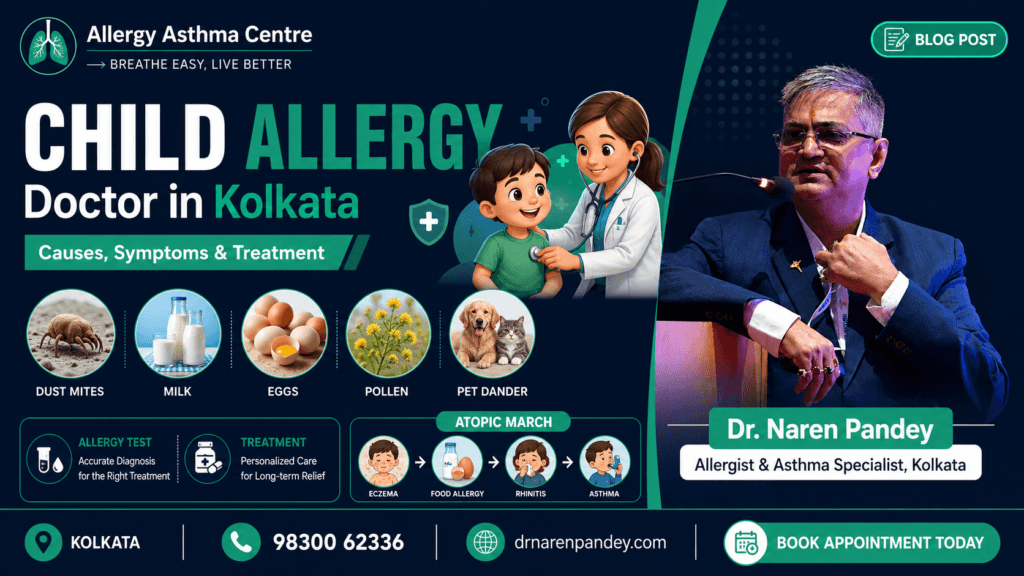
Child Allergy Doctor in Kolkata: Causes, Symptoms & Treatment | Dr. Naren Pandey
By Dr. Naren Pandey | Allergist & Asthma Specialist, Kolkata
Is your child sneezing repeatedly every morning? Does your little one develop skin rashes after eating certain foods? Is your child missing school frequently due to breathing problems or chronic nasal congestion? These could be signs of childhood allergy — one of the most rapidly growing health concerns affecting children in Kolkata today.
At the Allergy Asthma Centre, Dr. Naren Pandey has treated thousands of children with allergy, asthma, and related conditions in Kolkata. With over 20 years of experience, Dr. Naren Pandey is one of Kolkata’s most trusted child allergy doctors — helping children breathe freely, eat safely, and live healthier lives.
This complete guide explains what childhood allergy is, what causes it in Kolkata, and how to get your child the right treatment.
Why Are So Many Children Developing Allergies in Kolkata?
Childhood allergy has increased dramatically over the past two decades in urban cities like Kolkata. Several factors contribute to this:
The Hygiene Hypothesis Modern children are exposed to fewer infections and environmental microbes early in life — causing the immune system to overreact to harmless substances like dust, pollen, and food proteins.
Urban Environment
- High air pollution in Kolkata weakens children’s respiratory immune barriers
- Indoor allergens (dust mites, cockroach, mold) are concentrated in urban apartments
- Limited outdoor play means more time in allergen-rich indoor environments
Diet Changes
- Increased consumption of processed and packaged foods
- Reduced exposure to traditional home-cooked Bengali meals
- Early introduction of highly allergenic foods without medical guidance
Genetic Factors
- If one parent has allergy or asthma, the child has a 30–40% chance of developing it
- If both parents are allergic, the risk rises to 60–70%
Common Types of Allergy in Children
1. Allergic Rhinitis (Nasal Allergy) The most common allergic condition in children. Symptoms include repeated sneezing, runny nose, blocked nose, and itchy eyes — especially in the morning. Often mistaken for frequent colds.
2. Asthma The most serious respiratory consequence of untreated allergy in children. Characterised by wheezing, cough, chest tightness, and breathlessness. Allergic rhinitis is the most important risk factor for childhood asthma.
3. Food Allergy Affects up to 5–8% of children. Common triggers in Kolkata:
- Milk — most common food allergen in infants and toddlers
- Eggs — very common in children under 5
- Peanuts and tree nuts
- Prawns and fish — common in Bengali diet
- Wheat and soy
4. Eczema (Atopic Dermatitis) Dry, itchy, inflamed skin — often the first sign of allergy in infants. Children with eczema have a higher risk of developing food allergy, rhinitis, and asthma — a progression called the “Atopic March.”
5. Allergic Conjunctivitis Itchy, red, watery eyes — often accompanies nasal allergy. Very common in school-going children in Kolkata.
6. Urticaria (Hives) Sudden red, raised, intensely itchy welts on the skin — triggered by food, medication, or environmental allergens.
7. Drug Allergy Reactions to antibiotics (especially penicillin), NSAIDs, and other commonly prescribed medications.
Warning Signs: Does Your Child Have Allergy?
| Symptom | Possible Condition |
|---|---|
| Sneezing every morning, blocked nose | Allergic rhinitis |
| Recurrent “colds” lasting more than 2 weeks | Allergic rhinitis |
| Cough that worsens at night or with exercise | Asthma |
| Wheezing or breathing difficulty | Asthma |
| Skin rash after certain foods | Food allergy or eczema |
| Itchy, red, watery eyes | Allergic conjunctivitis |
| Hives or swelling after eating | Food allergy |
| Dry, itchy, scaly skin patches | Eczema |
| Repeated ear infections | Allergy-related |
| Poor sleep due to nasal congestion | Allergic rhinitis |
If your child has 3 or more of these symptoms — consult Dr. Naren Pandey immediately.
The Atopic March — Why Early Treatment Matters
The “Atopic March” describes the typical progression of allergic disease in children:
Eczema (infancy)
    ↓
Food Allergy (toddler years)
    ↓
Allergic Rhinitis (school age)
    ↓
Asthma (childhood/adolescence)
Each stage increases the risk of the next. A child with untreated eczema in infancy is significantly more likely to develop asthma by school age.
Early diagnosis and treatment at any stage can break this progression — preventing your child from developing more serious conditions.
How Is Childhood Allergy Diagnosed?
At Allergy Asthma Centre, Dr. Naren Pandey uses a child-friendly, comprehensive approach to allergy diagnosis:
Detailed History Dr. Naren Pandey spends time understanding your child’s symptoms, diet, home environment, family history, and school environment. This is the foundation of accurate diagnosis.
Skin Prick Test (SPT) Safe and accurate for children from age 2 onwards. Small amounts of allergen extracts are placed on the forearm and lightly pricked. Results in 20 minutes. Tests for:
- House dust mites
- Pollen, mold, cockroach
- Food allergens — milk, egg, wheat, nuts, seafood
- Pet dander
Specific IgE Blood Test Useful for infants and very young children who may not cooperate with skin testing. Also used when children cannot stop antihistamines.
Spirometry (Lung Function Test) For children aged 5 and above — confirms asthma and measures its severity. Available in-house at our Kolkata clinic.
Patch Test For children with contact eczema — identifies substances that trigger skin reactions on contact.
Child Allergy Treatment in Kolkata
1. Allergen Avoidance
Once the trigger is identified, Dr. Naren Pandey creates a practical avoidance plan suited to your child’s age and lifestyle:
For dust mite allergy:
- Allergen-proof covers for the child’s mattress and pillow
- Wash bedding weekly in hot water
- Remove stuffed toys from the bedroom
- Use HEPA air purifier in child’s room
For food allergy:
- Clear guidance on which foods to avoid completely
- Safe food alternatives to maintain balanced nutrition
- School lunch and snack guidance for Kolkata school settings
- Emergency action plan for accidental exposure
2. Medications for Children
Antihistamines Child-safe, non-drowsy antihistamines reduce sneezing, itching, and hives. Available as syrups for young children.
Nasal Corticosteroid Sprays Most effective medication for children with allergic rhinitis. Safe for long-term use from age 2 onwards.
Bronchodilators and Inhaled Steroids For children with asthma — reliever inhalers for acute attacks, and controller inhalers for long-term management. Dr. Naren Pandey teaches correct inhaler technique for both parent and child.
Topical Steroids and Moisturisers For children with eczema — appropriate strength steroid creams combined with regular moisturising reduce flare-ups.
3. Allergy Immunotherapy for Children
Immunotherapy is highly effective in children — and the earlier it is started, the better the long-term outcome.
Benefits of immunotherapy in children:
- Stops allergic rhinitis from progressing to asthma
- Reduces sensitisation to new allergens
- Provides long-term relief even after treatment ends
- Reduces need for daily medication
- Improves school attendance and academic performance
Available as:
- Subcutaneous injections (from age 5)
- Sublingual drops (more comfortable for children, from age 5)
Dr. Naren Pandey recommends immunotherapy for children with confirmed allergen sensitivity who have been symptomatic for more than 1–2 years.
“I always tell parents — treating your child’s allergy early is the best investment in their health. A child who develops asthma because of untreated rhinitis will struggle with it for life. We can prevent that.” — Dr. Naren Pandey, Allergy Asthma Centre, Kolkata
Special Situations — Child Allergy in Kolkata
School Allergy Management Many children in Kolkata suffer silently at school — unable to concentrate due to nasal congestion, missing classes due to asthma attacks, or avoiding school lunch due to food allergy fears. Dr. Naren Pandey provides:
- A written Allergy Management Plan for school
- Teacher guidance on recognising allergic reactions
- Emergency medication instructions
Monsoon Season Kolkata’s monsoon brings a surge in mold spores and humidity — worsening dust mite allergy, eczema, and asthma in children. Extra precautions during June–September are essential.
Air Quality On high pollution days in Kolkata, children with asthma or allergic rhinitis are particularly vulnerable. Monitoring AQI and limiting outdoor exposure on bad air days is important.
When Should You See Dr. Naren Pandey?
Bring your child to Allergy Asthma Centre if:
- Your child sneezes repeatedly every morning
- They have had more than 4–5 “colds” in a year
- They wheeze or have breathing difficulty
- They develop skin rashes after eating specific foods
- They have persistent eczema that is not improving
- They are missing school frequently due to health issues
- They have never had a proper allergy test
For complete allergy treatment information, visit our Allergy Treatment in Kolkata page.
Also read:
Watch: Child Allergy Explained by Dr. Naren Pandey (Bengali)
[Embed YouTube video: https://youtu.be/Pmx4lakLAw8]
Book Your Child’s Appointment
Allergy Asthma Centre 2/2A Dr. Suresh Sarkar Road, Kolkata – 700014 📞 +91 98300 62336 🕘 Monday – Saturday: 9:00 AM – 7:00 PM 🌐 drnarenpandey.com
Give your child the gift of allergy-free living. Book an appointment with Dr. Naren Pandey today.