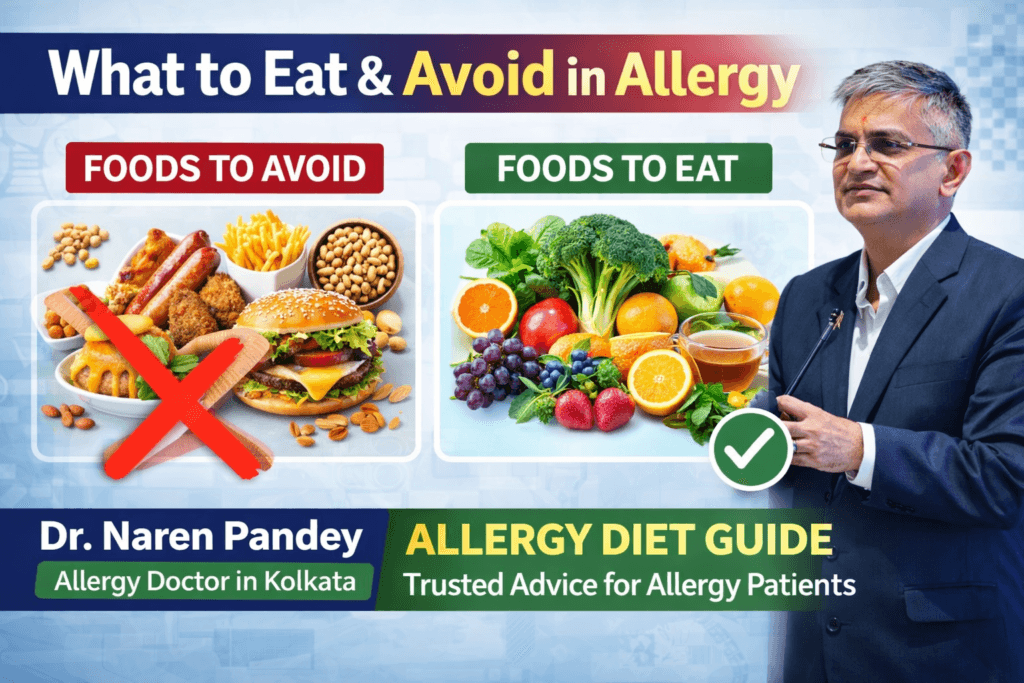
What to Eat and Avoid in Allergy: A Complete Diet Guide | Dr. Naren Pandey
By Dr. Naren Pandey | Allergist & Asthma Specialist, Kolkata
Did you know that what you eat every day can either trigger your allergy symptoms or help control them? For millions of allergy sufferers in Kolkata, diet is one of the most powerful — and most overlooked — tools for managing allergic reactions.
At the Allergy Asthma Centre, Dr. Naren Pandey regularly advises patients on the right diet to reduce allergy symptoms alongside proper medical treatment. This complete guide explains which foods to eat, which to avoid, and how diet fits into a comprehensive allergy management plan.
Can Diet Really Affect Allergy?
Yes — absolutely. The immune system and the gut are deeply connected. Nearly 70% of the immune system is located in the gut, which means the foods you eat directly influence how your immune system responds to allergens.
Certain foods cause inflammation — making allergy symptoms worse. Others are anti-inflammatory — helping calm the immune system and reduce reactions. Knowing the difference can significantly improve your quality of life as an allergy patient in Kolkata.
However, diet alone is not a cure. Proper allergy testing and treatment — including immunotherapy — remain the most effective path to permanent relief.
Foods That Trigger Allergy — What to Avoid
These foods are common allergy triggers and should be avoided or minimised, especially during allergy flare-ups:
High-Risk Allergy Trigger Foods
Seafood & Fish
- Prawns, shrimp, and lobster — one of the most common food allergens in Bengal
- Hilsa (ilish), rohu, and catfish — can trigger skin rashes and urticaria in sensitive patients
- Dried and fermented fish — highly allergenic
Dairy Products
- Milk, cheese, paneer, and curd — common triggers for skin allergy and eczema
- Ice cream and butter — especially problematic for children with milk allergy
Nuts and Seeds
- Peanuts — one of the most potent food allergens worldwide
- Cashews, almonds, and walnuts — can trigger severe allergic reactions
- Sesame seeds — an increasingly common allergen
Eggs
- Egg white is a common allergen — can cause hives, stomach pain, and skin rash
- Found hidden in many processed and baked foods — always check labels
Wheat and Gluten
- Wheat allergy (different from celiac disease) can cause skin reactions and digestive symptoms
- Found in bread, pasta, biscuits, and most packaged snacks
Processed and Packaged Foods
- Artificial colours, preservatives, and additives can trigger allergic reactions
- MSG (monosodium glutamate) — commonly found in instant noodles and Chinese food
- Packaged chips, biscuits, and junk food — best avoided completely
Spicy and Oily Food
- Excess spice increases histamine levels in the body — worsening itching and skin rashes
- Deep-fried food causes inflammation — making allergy symptoms more severe
Mustard Oil and Seeds
- Commonly used in Bengali cooking — mustard is a recognised food allergen
- Patients with mustard allergy should switch to sunflower or olive oil
Alcohol
- Alcohol increases histamine release in the body — directly worsening allergy symptoms
- Red wine, beer, and fermented drinks are particularly problematic
Foods to Eat During Allergy — Your Allergy-Friendly Diet
These foods help support the immune system, reduce inflammation, and ease allergy symptoms:
Best Foods for Allergy Patients
Vitamin C Rich Fruits
- Amla (Indian gooseberry) — the richest natural source of Vitamin C
- Oranges, lemons, and sweet lime — natural antihistamines
- Guava, kiwi, and papaya — boost immunity and reduce allergic inflammation
Green Leafy Vegetables
- Spinach, methi (fenugreek), and drumstick leaves — rich in antioxidants
- Broccoli — contains quercetin, a natural antihistamine compound
- Avoid raw salads if pollen allergy is present — cook vegetables lightly instead
Anti-Inflammatory Foods
- Turmeric (haldi) — curcumin in turmeric is one of the most powerful natural anti-inflammatory compounds. Add to warm milk or dal daily
- Ginger — reduces histamine production and soothes inflamed airways
- Garlic — natural immune booster with antihistamine properties
Warm Fluids
- Warm water with lemon and honey — clears mucus and soothes nasal passages
- Herbal teas — tulsi (basil) tea, ginger tea, and green tea reduce inflammation
- Warm turmeric milk (haldi doodh) — natural immunity booster
Omega-3 Rich Foods
- Flaxseeds (alsi) — excellent source of Omega-3 that reduces allergic inflammation
- Walnuts — if not allergic to tree nuts
- Mustard-free fish like salmon — reduces systemic inflammation
Probiotic Foods
- Homemade curd (dahi) — if dairy is tolerated — strengthens gut immunity
- Fermented foods like idli and dosa — support gut health and immune balance
Local Kolkata Diet Tips
- Dal (lentils) — excellent protein source, generally well-tolerated
- Rice — easily digestible, low allergen risk
- Khichuri — a perfect allergy-friendly meal during flare-ups
- Bitter gourd (karela) — natural blood purifier, reduces skin allergy symptoms
Practical Diet Tips for Allergy Patients in Kolkata
1. Keep a Food Diary Write down everything you eat and note when symptoms appear. This is the simplest way to identify your personal food triggers. Share this diary with Dr. Naren Pandey at your next visit.
2. Read Food Labels Packaged foods often contain hidden allergens — milk powder, soy, wheat, nuts, or artificial colours. Always check the ingredient list before buying.
3. Cook at Home Restaurant and street food contain unknown ingredients and cross-contamination risks. Home-cooked food is always safer for allergy patients.
4. Stay Hydrated Drink at least 8–10 glasses of warm or room-temperature water daily. Cold water can trigger throat irritation and worsen nasal symptoms.
5. Eat Small, Frequent Meals Large meals stress the digestive system and can trigger inflammatory responses. Smaller, more frequent meals are better for allergy patients.
6. Avoid Food During Seasonal Peak During Kolkata’s pollen season (March–May) and monsoon (June–September), reduce intake of known triggers — especially seafood and dairy.
7. Never Self-Diagnose Food Allergy Not all food reactions are allergies. Some may be food intolerance. Only a proper allergy test can confirm which foods you are truly allergic to.
The Difference Between Food Allergy and Food Intolerance
Many patients in Kolkata confuse food allergy with food intolerance — they are very different:
| Feature | Food Allergy | Food Intolerance |
|---|---|---|
| Immune system involved | Yes | No |
| Amount of food needed | Even tiny amounts trigger reaction | Large amounts usually needed |
| Reaction speed | Within minutes to 2 hours | Hours to days |
| Severity | Can be life-threatening | Usually not dangerous |
| Diagnosis | Skin Prick Test / IgE Blood Test | Elimination diet |
| Treatment | Immunotherapy available | Avoidance only |
How to Identify Your Food Allergy — Allergy Testing in Kolkata
Diet management is most effective when you know exactly which foods you are allergic to. At Allergy Asthma Centre, Dr. Naren Pandey offers:
Skin Prick Test (SPT) A panel of common food allergens — including seafood, egg, milk, wheat, nuts, and soy — is tested on the forearm skin. Results in 20 minutes. This is the most accurate and affordable food allergy test available in Kolkata.
Specific IgE Blood Test Measures allergen-specific antibodies in the blood. Useful for patients who cannot undergo skin testing.
For complete information on allergy testing, read our guide: Allergy Tests in Kolkata
Diet + Treatment = Best Results
Diet management helps control symptoms — but it is not a substitute for proper medical treatment.
For patients with moderate to severe food allergy, Dr. Naren Pandey recommends:
- Accurate allergy testing — to identify the exact food allergen
- Personalised avoidance plan — based on your specific triggers
- Medications — antihistamines and emergency epinephrine if needed
- Immunotherapy — for long-term desensitisation in selected cases
For a complete overview of allergy treatment options, visit our Allergy Treatment in Kolkata page.
Watch: Allergy Diet Guide by Dr. Naren Pandey
[Embed YouTube video: https://youtu.be/egqokr7-27E]
When to See Dr. Naren Pandey
Consult us immediately if:
- You develop hives, swelling, or breathing difficulty after eating
- Your allergy symptoms are not improving despite diet changes
- You are unsure which foods are triggering your reactions
- You want a proper food allergy test done
- Your child has suspected food allergy
For complete allergy treatment information, visit our
Allergy Treatment in Kolkata page. https://drnarenpandey.com/allergy-treatment-in-kolkata/
Book Your Appointment
Allergy Asthma Centre 2/2A Dr. Suresh Sarkar Road, Kolkata – 700014 📞 +91 98300 62336 🕘 Monday – Saturday: 9:00 AM – 7:00 PM 🌐 drnarenpandey.com
Eat right. Get tested. Live allergy-free.