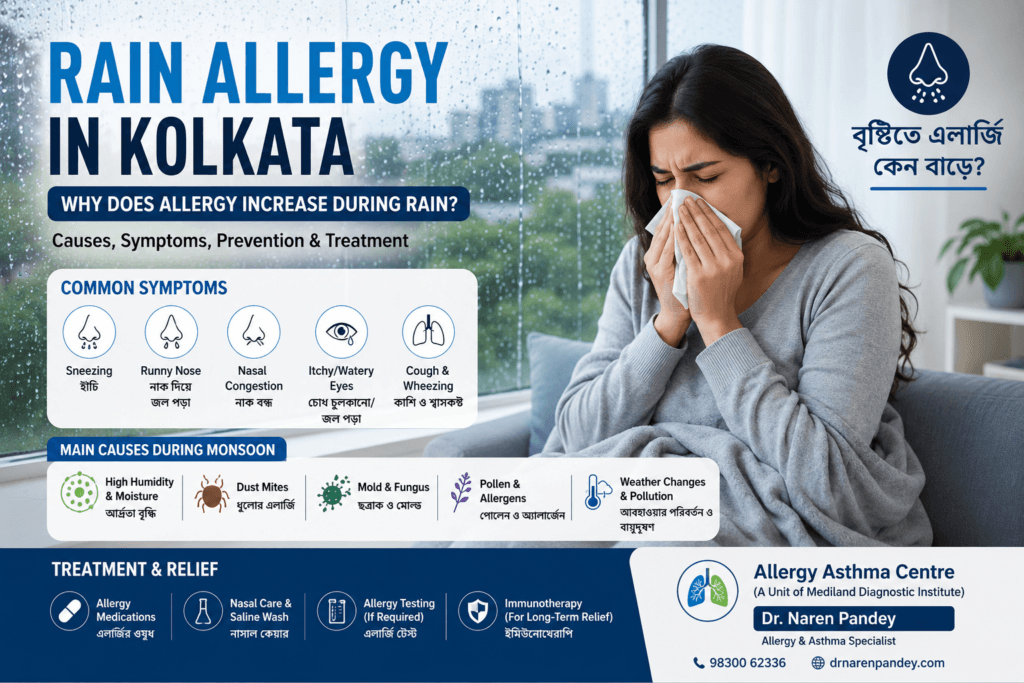
Rain Allergy in Kolkata: Why Does Allergy Increase During Rain?
Causes, Symptoms, Prevention & Treatment | Dr. Naren Pandey
Rain brings relief from the heat, but for many people in Kolkata, the monsoon season can also bring sneezing, runny nose, nasal congestion, coughing, wheezing and breathing difficulties. Many people ask, “বৃষ্টিতে এলার্জি কেন হয়?” (Why does allergy increase during rain?). Rainwater itself is not necessarily the cause of an allergic reaction. Instead, changes in humidity, temperature, mold growth, dust mites, pollen and indoor dampness can trigger or worsen symptoms in sensitive people.
For people with allergic rhinitis, dust allergy, mold allergy or allergic asthma, understanding these triggers can make monsoon allergy management easier. If you are searching for “বর্ষাকালে এলার্জি কেন হয় / monsoon allergy causes” or “এলার্জির চিকিৎসা কলকাতা / allergy treatment in Kolkata”, this guide explains common causes, symptoms, prevention strategies and treatment options.
Why Does Allergy Increase During Rain?
The question “বৃষ্টিতে এলার্জি বাড়ে কেন?” (why does allergy increase during rain?) has several possible answers. Rain changes environmental conditions. After prolonged rainfall, humidity can rise considerably. Damp walls, wet furniture, poorly ventilated rooms and accumulated moisture can encourage mold growth. High humidity can also create favourable conditions for dust mites.
Main Reasons for Monsoon Allergy
- High humidity
- Dust mites
- Indoor mold
- Damp walls and rooms
- Poor ventilation
- Pollen and environmental allergens
- Sudden temperature changes
- Air pollution
- Weather-related asthma triggers
Therefore, বর্ষায় এলার্জি (monsoon allergy) is often the result of multiple environmental factors rather than rain itself.
1. High Humidity and Dust Mite Allergy
One major reason people experience বর্ষাকালে এলার্জি (allergy during monsoon) is increased humidity. Dust mites are microscopic organisms commonly found in mattresses, pillows, carpets, curtains and upholstered furniture. Higher humidity can help dust mites thrive.
- Frequent sneezing
- Runny nose
- Blocked nose
- Itchy nose
- Itchy or watery eyes
- Throat irritation
- Coughing
- Post-nasal drip
SEO keywords: Dust allergy treatment in Kolkata | dust allergy doctor Kolkata | ধুলোর এলার্জি চিকিৎসা | dust allergy symptoms
2. Mold Allergy During the Monsoon
When walls, ceilings, bathrooms or other surfaces remain damp, mold can grow. Mold spores can become airborne and may trigger allergic reactions in sensitive people. Mold exposure can also worsen asthma symptoms such as coughing, wheezing and shortness of breath.
Common Mold Allergy Symptoms
- Sneezing
- Runny nose
- Nasal congestion
- Itchy eyes
- Watery eyes
- Cough
- Wheezing
- Throat irritation
- Breathing difficulty in susceptible asthma patients
SEO keywords: Mold allergy treatment | mold allergy symptoms | বর্ষায় ছত্রাকের এলার্জি | mold allergy Kolkata
3. Pollen and Seasonal Allergy
Pollen is another common environmental allergen. The relationship between rain and pollen can be complicated. Rain may temporarily reduce airborne pollen, but weather patterns, plant growth and conditions after rainfall can influence subsequent allergen exposure. If symptoms appear during particular seasons every year, you may have seasonal allergic rhinitis.
- Sneezing
- Runny nose
- Nasal blockage
- Itchy eyes
- Watery eyes
- Throat irritation
Keywords: Seasonal allergy | seasonal allergic rhinitis | seasonal allergy treatment Kolkata | ঋতু পরিবর্তনে এলার্জি
4. Can Rain Trigger Asthma?
For some people with asthma, weather changes can contribute to symptoms. Hot and humid weather, sudden temperature changes, storms, pollen, mold and air pollution may act as asthma triggers. Symptoms may include shortness of breath, wheezing, chest tightness, persistent cough and night-time coughing.
If you already have asthma and notice that বর্ষায় শ্বাসকষ্ট বাড়ে (breathing difficulty increases during monsoon), discuss your triggers and treatment plan with your doctor.
Allergy or Common Cold: How Can You Tell the Difference?
Many people confuse বৃষ্টিতে হাঁচি (sneezing during rain) with a common cold. Although some symptoms overlap, allergies and viral infections are different conditions.
Allergy
- Repeated sneezing
- Itchy nose
- Itchy eyes
- Watery eyes
- Runny nose
- Nasal congestion
- Symptoms that recur after exposure to a trigger
Common Cold
- Sore throat
- Cough
- Runny nose
- Fatigue
- Fever in some cases
Not every episode of sneezing or runny nose is an allergy. Non-allergic rhinitis can also be triggered by changes in weather, temperature or humidity.
Common Monsoon Allergy Symptoms
Nose Symptoms
- Frequent sneezing / ঘন ঘন হাঁচি
- Runny nose / নাক দিয়ে জল পড়া
- Blocked nose / নাক বন্ধ
- Itchy nose / নাক চুলকানো
Eye Symptoms
- Itchy eyes
- Watery eyes
- Redness or irritation
Chest and Breathing Symptoms
- Cough
- Wheezing / ঘোঁ ঘোঁ শব্দ
- Chest tightness / বুকে চাপ
- Shortness of breath / শ্বাসকষ্ট
How to Prevent Allergy During Monsoon
Keep Indoor Humidity Under Control
Excess indoor moisture can promote mold growth. Consider using an air conditioner or dehumidifier, improving ventilation, using bathroom exhaust fans, repairing water leaks and keeping damp areas dry.
Control Dust Mites
If you have dust allergy / ধুলোর এলার্জি, pay particular attention to the bedroom.
- Wash bedding regularly
- Use allergen-proof mattress and pillow covers
- Reduce unnecessary carpets
- Clean curtains regularly
- Vacuum appropriately
- Keep bedroom humidity under control
Prevent Mold Growth
- Damp walls
- Water leakage
- Musty smell
- Mold spots
- Wet carpets
- Poorly ventilated bathrooms
Fixing moisture problems is an important way to reduce indoor mold growth.
Allergy Treatment in Kolkata
If allergy symptoms occur repeatedly every monsoon, simply treating each episode may not address the underlying trigger. A specialist may consider medical history, clinical evaluation, allergen exposure patterns, allergy testing and an individual treatment plan.
1. Medical History and Clinical Evaluation
- When symptoms occur
- Whether symptoms increase during rain
- Home and workplace environment
- Dust exposure
- Mold exposure
- Seasonal patterns
- Asthma symptoms
- Family history of allergy
2. Allergy Testing
Depending on symptoms, an allergist may recommend appropriate testing. Possible options include skin prick testing and specific IgE blood testing. Testing can help identify allergens such as dust mites, pollen or mold when clinically appropriate.
Keywords: Allergy test in Kolkata | allergy testing Kolkata | allergy test near me | এলার্জি টেস্ট কলকাতা | allergy specialist Kolkata
Medicines for Allergy and Allergic Rhinitis
Treatment depends on the diagnosis and severity of symptoms.
Antihistamines
These can help relieve symptoms such as sneezing, itching and runny nose.
Nasal Sprays
Certain prescription nasal sprays may be used to control inflammation associated with allergic rhinitis.
Saline Nasal Care
Saline nasal rinsing or sprays may be recommended in some situations to help clear nasal secretions and irritants.
Medication should be selected according to the individual’s condition, age, other medicines and medical history.
Allergy Immunotherapy: A Long-Term Treatment Option
For selected patients with confirmed allergic disease, allergen immunotherapy may be considered. Unlike medicines that mainly control symptoms, immunotherapy aims to modify the body’s response to a specific allergen over time. It may be considered for selected patients with allergic rhinitis and certain allergic asthma cases.
Allergy immunotherapy is not suitable for everyone. Proper allergy evaluation and specialist supervision are important before starting treatment.
SEO keywords: Allergy immunotherapy Kolkata | allergy vaccine Kolkata | এলার্জি ভ্যাকসিন | allergy immunotherapy treatment
When Should You See an Allergy Specialist?
- Sneezing continues for weeks
- Allergy returns every monsoon
- Nasal blockage affects sleep
- You frequently need allergy medicines
- Symptoms interfere with work or study
- You experience repeated coughing
- You develop wheezing
- You have breathing difficulty
- Symptoms worsen around damp or moldy areas
- You already have asthma and symptoms are becoming harder to control
If you develop severe breathing difficulty or symptoms of a serious allergic reaction, seek urgent medical care.
Dr. Naren Pandey – Allergy & Asthma Specialist in Kolkata
For people looking for an allergy doctor in Kolkata / এলার্জি ডাক্তার কলকাতা, specialist evaluation can help determine whether symptoms are related to allergic rhinitis, dust allergy, mold sensitivity, asthma or another condition.
Dr. Naren Pandey, Allergist & Asthma Specialist, provides evaluation and management of allergy and asthma-related conditions in Kolkata.
Allergy Asthma Centre
- 2/2A, Dr. Suresh Sarkar Road, Kolkata – 700014
- Phone: 98300 62336
- Website: drnarenpandey.com
Internal-link opportunities: Allergy Treatment in Kolkata | Allergy Doctor Near Me in Kolkata | Asthma Treatment in Kolkata | Allergic Rhinitis Treatment in Kolkata | Allergy Testing in Kolkata
Watch the Video: Why Does Allergy Increase During Rain?
Watch Dr. Naren Pandey’s video on “বৃষ্টি হলেই এলার্জি বাড়ে কেন? আসল কারণ জানলে অবাক হবেন” to learn more about common allergy triggers during the rainy season.

Frequently Asked Questions
Does rain itself cause allergy?
Not necessarily. Rain itself is not an allergen. However, changes in humidity, mold, dust mites, pollen and weather conditions can trigger or worsen symptoms in susceptible people.
বৃষ্টিতে এলার্জি কেন হয়?
বৃষ্টিতে এলার্জি কেন হয় / why does allergy increase during rain? One possible reason is increased humidity, which can support dust mites and mold. Weather changes may also aggravate asthma symptoms in some people.
Why do I sneeze more during monsoon?
বর্ষায় হাঁচি কেন হয়? Dust mites, mold, pollen and changes in temperature or humidity can contribute to sneezing and nasal symptoms.
Can monsoon weather worsen asthma?
Yes. High humidity, weather changes, mold, pollen and air pollution can trigger asthma symptoms in susceptible individuals.
Where can I get allergy treatment in Kolkata?
If you have recurring allergy symptoms / এলার্জির সমস্যা, an allergist or appropriate medical specialist can evaluate your symptoms and recommend testing and treatment based on the underlying cause.
Conclusion
বৃষ্টিতে এলার্জি বাড়ে কেন? (Why does allergy increase during rain?)—এর উত্তর শুধুমাত্র “বৃষ্টির জল” নয়. For many sensitive individuals, the bigger factors may be humidity, dust mites, mold, pollen, damp indoor environments and weather changes.
If you repeatedly experience বর্ষাকালে এলার্জি / monsoon allergy, frequent sneezing, blocked nose, runny nose, coughing or breathing difficulty, identifying your triggers can be an important step toward better long-term management.
Do not ignore recurring allergy or breathing symptoms. A proper clinical evaluation can help determine the cause and the most appropriate treatment approach.