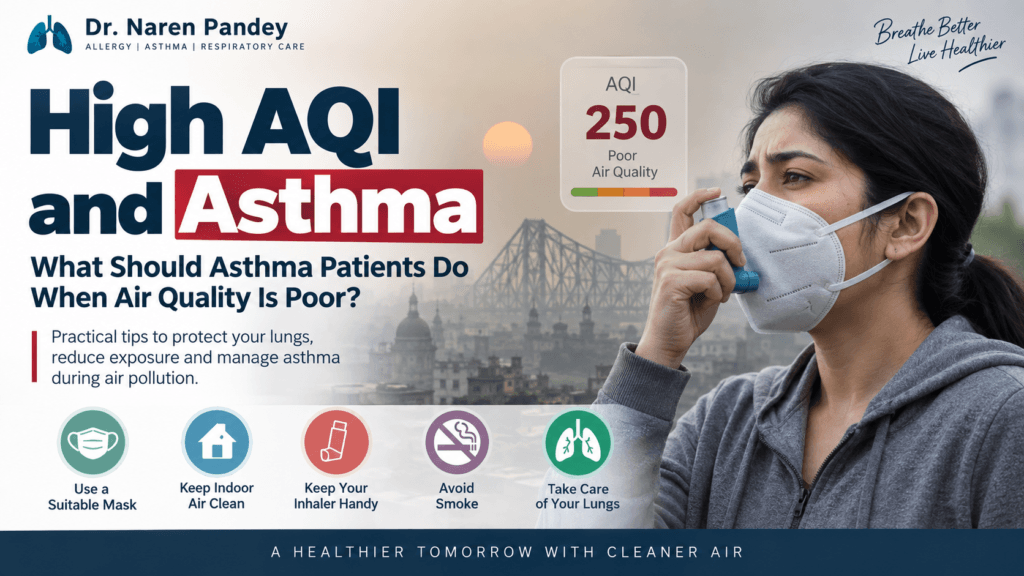
High AQI and Asthma: What Should Asthma Patients Do When Air Quality Is Poor?
High AQI Asthma Care | Practical Asthma Care Tips During Air Pollution in Kolkata
If you notice more coughing, chest tightness, wheezing, or breathing difficulty when the air quality becomes poor, you are not alone. For people living with asthma, exposure to air pollution can be an important trigger for worsening respiratory symptoms.
In a busy city like Kolkata, traffic emissions, dust, smoke, construction-related particles, and other airborne pollutants can make it difficult to completely avoid polluted air. This makes high AQI asthma care an important part of day-to-day asthma management.
The good news is that there are practical steps asthma patients can take to reduce exposure and recognise symptoms early.
This article explains how high AQI can affect asthma, what asthma patients should do when air quality is poor, how to reduce pollution exposure, and when medical advice may be necessary.
What Is AQI and Why Does It Matter for Asthma?
AQI, or Air Quality Index, is used to communicate the quality of outdoor air. When the concentration of certain pollutants increases, air quality can deteriorate.
People with asthma may have more sensitive or reactive airways. Exposure to polluted air may irritate the respiratory tract and, in some individuals, contribute to increased coughing, wheezing, chest tightness, or breathing difficulty.
However, it is important to understand that every asthma patient responds differently to air pollution.
For one person, pollution may be a major trigger. For another, symptoms may be more strongly associated with dust mites, pollen, smoke, respiratory infections, exercise, or other allergens.
Therefore, asthma management should be individualised rather than based only on the AQI.
For a broader understanding of asthma symptoms, causes, diagnosis and treatment, read:
👉 Asthma Treatment in Kolkata
How Can Air Pollution Worsen Asthma Symptoms?
When sensitive airways are exposed to irritants in polluted air, some asthma patients may experience worsening respiratory symptoms.
Common symptoms can include:
Persistent or repeated coughing
Wheezing or a whistling sound while breathing
Chest tightness
Shortness of breath
Difficulty performing normal physical activities
Increased need for prescribed reliever medication
Coughing or breathing difficulty at night or early in the morning
If these symptoms are occurring repeatedly, it is important not to focus only on temporary symptom relief.
A medical evaluation can help determine whether the asthma is adequately controlled and whether specific triggers are contributing to the problem.
What Should Asthma Patients Do When AQI Is High?
1. Reduce Unnecessary Outdoor Exposure
When outdoor air quality is poor, try to reduce unnecessary exposure to heavily polluted environments.
Traffic-heavy roads, construction sites and areas with visible smoke or dust may expose you to higher levels of airborne irritants.
If you know that outdoor pollution triggers your asthma symptoms, consider adjusting your daily routine during periods of poor air quality.
This does not necessarily mean that every asthma patient must remain indoors all day. The goal is to reduce unnecessary exposure while continuing your normal activities safely.
2. Wear a Suitable Mask When Going Outside
Wearing a well-fitting mask when outdoors may help reduce exposure to airborne particles.
However, it is important to remember that:
A mask is not a treatment for asthma.
It should not be considered a replacement for your prescribed asthma medication or asthma management plan.
If wearing a particular mask causes significant discomfort or makes breathing difficult, discuss the issue with your doctor.
3. Keep Your Prescribed Inhaler Available
If your doctor has prescribed a reliever or rescue inhaler, keep it accessible when you are outside, particularly if you have previously experienced asthma symptoms after exposure to pollution.
Use your inhaler according to your doctor’s instructions.
Do not increase or change your inhaler dose on your own simply because the AQI is high.
If you find that you are needing your reliever medication more frequently than usual, this may be a sign that your asthma is not adequately controlled and you should discuss it with your healthcare professional.
4. Pay Attention to Indoor Air Quality
Staying indoors does not automatically mean that you are completely protected from respiratory triggers.
Indoor environments can contain:
Dust
Dust mites
Smoke
Mould
Dampness
Other allergens and irritants
Keeping your home environment clean and reducing known asthma triggers can therefore be an important part of asthma care.
If dust exposure appears to trigger your symptoms, learn more about:
👉 Dust Allergy Treatment in Kolkata
5. Avoid Tobacco Smoke and Other Sources of Smoke
Smoke can irritate the airways and may worsen respiratory symptoms in people with asthma.
Avoid smoking and try to minimise exposure to second-hand smoke.
During periods of poor outdoor air quality, adding cigarette smoke or other indoor pollutants can further increase respiratory irritation.
A cleaner breathing environment is especially important for people who already have sensitive airways.
6. Track Your Asthma Symptoms
One of the simplest but most useful things an asthma patient can do is understand their own symptom pattern.
Ask yourself:
Do I cough more when I go outside?
Does traffic pollution trigger wheezing?
Am I waking up at night because of coughing?
Do I feel more chest tightness on days with poor air quality?
Am I using my reliever inhaler more frequently?
Are normal activities becoming more difficult?
Keeping track of these patterns can provide useful information during your medical consultation.
A Simple High-AQI Checklist for Asthma Patients
When air quality is poor, remember:
✔ Check the local air quality before planning prolonged outdoor activities
✔ Reduce unnecessary exposure to traffic, smoke and dust
✔ Use a suitable mask when appropriate
✔ Keep your prescribed inhaler accessible
✔ Avoid smoking and second-hand smoke
✔ Keep indoor spaces clean and reduce known allergens
✔ Follow your prescribed asthma action plan
✔ Seek medical advice if symptoms become frequent or difficult to control
These simple measures can help you manage your exposure without unnecessarily restricting your entire daily routine.
Does Every Asthma Patient Need the Same Precautions?
No.
Asthma is not exactly the same for every patient. Different people can have different triggers and different patterns of symptoms.
For some patients, air pollution may be a significant trigger. Others may be more sensitive to dust mites, pollen, animal allergens, smoke or respiratory infections.
Some patients may also have allergic rhinitis along with asthma.
Symptoms such as frequent sneezing, a blocked or runny nose, nasal itching and itchy eyes may suggest that an allergic condition is also contributing to respiratory problems.
Learn more about the relationship between allergy and respiratory symptoms:
👉 Allergic Rhinitis Treatment in Kolkata
Is Avoiding High AQI Enough to Treat Asthma?
No.
Reducing pollution exposure is an important preventive measure, but it is not a substitute for appropriate asthma treatment.
If you frequently experience:
Coughing
Wheezing
Chest tightness
Night-time symptoms
Exercise-related breathing difficulty
Recurrent asthma flare-ups
Increasing reliance on reliever medication
your asthma control may need to be reassessed.
Depending on your symptoms and clinical history, your doctor may recommend appropriate investigations to understand your condition and identify possible triggers.
When allergy is suspected, appropriate allergy testing may also be considered.
👉 Allergy Tests in Kolkata
When Should an Asthma Patient Seek Medical Help?
Asthma symptoms should not be ignored when they are becoming more frequent or severe.
Consider consulting a healthcare professional if:
Your asthma symptoms are occurring more frequently
You are waking up at night because of asthma
Your normal daily activities are becoming difficult
You need your reliever medication more often than usual
Your symptoms repeatedly worsen after pollution exposure
You are experiencing frequent asthma flare-ups
Your current treatment does not seem to be controlling your symptoms
Seek urgent medical care if breathing difficulty becomes severe.
If you are struggling significantly to breathe, have severe respiratory distress, or cannot speak normally because of breathlessness, do not rely on home remedies or wait for the symptoms to settle. Seek appropriate emergency medical care.
Asthma and Air Pollution in Kolkata: Why Individualised Care Matters
Kolkata is a busy urban environment, and completely avoiding outdoor air pollution may not always be realistic.
The practical goal is therefore to reduce unnecessary exposure while keeping asthma well controlled.
This is where individualised asthma care becomes important.
Your treatment plan may depend on factors such as:
Your asthma symptoms
Known triggers
Allergy history
Frequency of flare-ups
Medication use
Medical history
Lung function, when clinically indicated
In some patients, investigations such as spirometry may be useful as part of respiratory assessment.
Rather than changing treatment every time the AQI changes, it is better to have a clear, doctor-guided asthma management plan.
High AQI and Children With Asthma
Children with asthma may also need particular attention during periods of poor air quality.
Parents should observe whether the child develops:
Persistent coughing
Wheezing
Breathing difficulty
Reduced activity because of breathlessness
Night-time coughing
Increased need for prescribed rescue medication
Parents should follow the child’s existing asthma management plan and speak with the child’s doctor if symptoms are becoming more frequent.
Children should not be given asthma medication without appropriate medical guidance.
Can Air Pollution Cause Asthma?
Air pollution can have significant effects on respiratory health and may contribute to worsening asthma symptoms and exacerbations.
However, asthma is a multifactorial respiratory condition. Genetic factors, allergic sensitivity, environmental exposure and other triggers can all play a role.
Therefore, if someone develops repeated respiratory symptoms, the underlying cause should be properly evaluated rather than assuming that pollution is the only reason.
🎥 Watch: High AQI Asthma Care
For practical guidance on what asthma patients should do when AQI is high, watch the video below:
YouTube Video:
WordPress Video Embed
In WordPress Gutenberg, add a YouTube block and paste the above YouTube URL. WordPress should automatically convert it into an embedded video.
Frequently Asked Questions About AQI and Asthma
Can high AQI trigger asthma symptoms?
Yes. Poor air quality and air pollution may worsen respiratory symptoms in some people with asthma. However, individual sensitivity varies and other asthma triggers may also be involved.
Should asthma patients stay indoors when AQI is high?
Reducing unnecessary outdoor exposure may be helpful, particularly for people who know that pollution triggers their symptoms. However, indoor air quality should also be maintained because dust, smoke, mould and other indoor triggers can affect asthma.
Can wearing a mask prevent an asthma attack?
A suitable, well-fitting mask may help reduce exposure to airborne particles, but it cannot guarantee prevention of an asthma attack and should not replace prescribed asthma treatment.
Should I increase my inhaler dose when AQI is high?
No. Do not change your inhaler dose on your own simply because the AQI is high. Follow your prescribed asthma action plan and consult your doctor if symptoms are becoming difficult to control.
Can air pollution cause asthma?
Air pollution can negatively affect respiratory health and is associated with worsening asthma symptoms. However, asthma has multiple possible contributing factors, including genetic, allergic and environmental factors.
When should I consult an asthma specialist?
Consider consulting an asthma specialist if symptoms are frequent, disturb sleep, interfere with daily activities, or require increasing use of reliever medication.
Conclusion: High AQI Asthma Care Means Prevention, Awareness and Proper Treatment
High AQI does not mean that asthma patients need to panic.
The more useful approach is to understand your triggers, reduce unnecessary exposure to polluted air, avoid smoke, plan outdoor activities carefully and follow your prescribed asthma treatment.
Most importantly, do not ignore repeated asthma symptoms.
If coughing, wheezing, chest tightness or breathing difficulty is becoming more frequent, it may be time to reassess your asthma control and identify possible triggers.
For patients whose asthma appears to be associated with air pollution, dust or allergy, a personalised evaluation can help determine the most appropriate approach to long-term management.
Consult Dr. Naren Pandey – Allergy & Asthma Specialist in Kolkata
Allergy Asthma Centre
Pandey Bhawan, 1st Floor
2/2A Dr. Suresh Sarkar Road
Kolkata – 700014
Phone: 98300 62336
Website: drnarenpandey.com