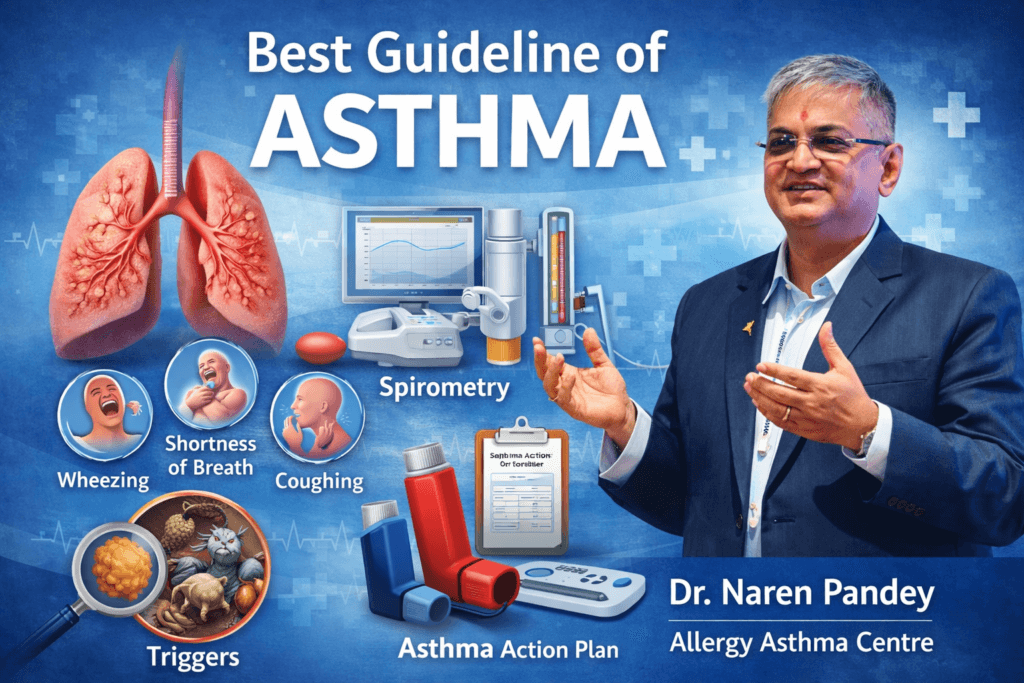
Allergy Asthma Centre – Evidence-Based Medical Approach
Asthma is a chronic inflammatory disease of the airways and one of the most common respiratory disorders seen in clinical practice. According to Dr. Naren Pandey, Senior Consultant at Allergy Asthma Centre, effective asthma control requires early diagnosis, correct classification, patient education, and long-term, guideline-based treatment.
This article outlines the best medical guidelines for asthma management, as explained by Dr. Naren Pandey, focusing on clinical assessment, diagnosis, treatment protocols, and preventive strategies.
Understanding Asthma: A Medical Overview
Asthma is a chronic airway inflammatory disorder characterized by variable and recurring symptoms, reversible airflow obstruction, and bronchial hyper-responsiveness.
Key Medical Keywords
asthma disease
bronchial asthma
chronic asthma
respiratory allergy
allergic asthma
Clinical Symptoms of Asthma
Asthma symptoms may vary in intensity and frequency and often worsen at night or early morning.
Common Clinical Features
Wheezing
Shortness of breath (dyspnea)
Chest tightness
Chronic or recurrent cough
Reduced exercise tolerance
Uncontrolled asthma can lead to frequent exacerbations and emergency hospital visits.
Causes and Triggers of Asthma
Asthma develops due to a combination of genetic predisposition and environmental exposure.
Common Asthma Triggers
Dust mites, pollen, mold
Air pollution and smoke
Respiratory infections
Cold air
Exercise-induced stress
Occupational allergens
Emotional stress
Identifying and avoiding triggers is a core principle in asthma management.
Diagnosis of Asthma: Medical Guidelines
Accurate diagnosis is essential before initiating long-term asthma therapy.
Diagnostic Evaluation
Detailed patient history
Physical examination of respiratory system
Spirometry (lung function test)
Peak expiratory flow rate (PEFR)
Allergy testing (when indicated)
Objective lung function testing is critical to confirm asthma and assess severity.
Best Guideline of Asthma Management by Dr. Naren Pandey
Dr. Naren Pandey emphasizes a step-wise, individualized, and evidence-based asthma management approach, aligned with international asthma guidelines.
Core Principles of Asthma Management
Accurate assessment of asthma severity and control
Long-term control of airway inflammation
Prompt relief of acute symptoms
Prevention of asthma exacerbations
Patient education and self-management
Medical Treatment of Asthma
Asthma treatment is divided into reliever therapy and controller therapy.
1. Reliever Medications (Rescue Therapy)
Short-acting bronchodilators
Used during acute asthma symptoms
Provide rapid airway relaxation
Keywords: asthma inhaler, quick relief inhaler
2. Controller Medications (Long-Term Therapy)
Inhaled corticosteroids (ICS)
ICS + long-acting bronchodilator combinations
Leukotriene receptor antagonists (selected cases)
Controller therapy is the foundation of asthma treatment and must be taken regularly even when symptoms are absent.
Keywords: asthma treatment, asthma controller medicine, inhaled corticosteroids
Importance of Correct Inhaler Technique
Incorrect inhaler technique is a common cause of poor asthma control.
Medical Recommendations
Proper inhaler training
Use of spacers when required
Regular review of inhaler technique during follow-ups
Non-Pharmacological Management of Asthma
Along with medication, lifestyle and environmental control play a vital role.
Supportive Measures
Allergen avoidance
Indoor air quality control
Breathing exercises
Weight management
Smoking cessation
Monitoring and Follow-Up
Regular follow-up is essential for long-term asthma control.
Follow-Up Goals
Assess symptom control
Monitor lung function
Adjust treatment step-up or step-down
Prevent complications
Asthma Action Plan: Patient Education
Dr. Naren Pandey strongly recommends that every asthma patient should have a written asthma action plan.
Asthma Action Plan Includes:
Daily medication schedule
Early warning signs of worsening asthma
Emergency steps during severe attacks
Patient education significantly reduces hospital admissions and improves quality of life.
When to Seek Emergency Medical Care
Immediate medical attention is required if:
Severe breathlessness occurs
Symptoms do not respond to reliever inhaler
Difficulty in speaking or walking
Bluish discoloration of lips or nails
Prevention of Asthma Complications
Preventive Strategies
Early diagnosis
Regular medication adherence
Trigger avoidance
Annual medical review
Vaccination against respiratory infections
Conclusion
Asthma is a chronic but highly controllable respiratory condition when managed according to proper medical guidelines. As emphasized by Dr. Naren Pandey of Allergy Asthma Centre, successful asthma management depends on early diagnosis, individualized treatment, patient education, and regular follow-up.