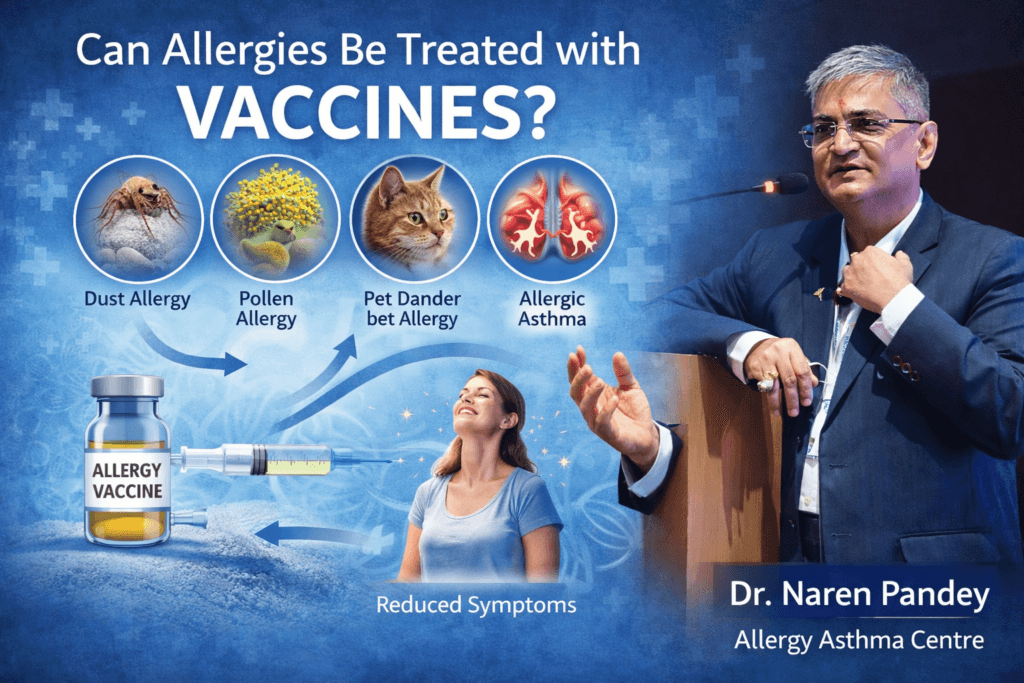
A Clinical Overview of Allergy Immunotherapy by Dr. Naren Pandey
Allergy is a common chronic condition that can affect the respiratory system, skin, and immune system. It occurs when the immune system reacts abnormally to harmless environmental substances known as allergens. Patients frequently ask whether allergies can be permanently treated rather than only managed with medications.
According to Dr. Naren Pandey, Consultant Allergy and Asthma Specialist, selected allergic conditions can be effectively treated using Allergy Immunotherapy (Allergy Vaccines) — a scientifically validated treatment that modifies the immune response and offers long-term relief.
This article provides a structured medical overview covering:
The main causes of allergies
What allergy immunotherapy (allergy vaccine) is and how it works
Which types of allergies can be treated with vaccines
The benefits and limitations of allergy vaccines
Doctor-recommended precautions and clinical advice
Understanding Allergy: A Medical Perspective
An allergy is an IgE-mediated hypersensitivity reaction triggered by exposure to allergens. These allergens stimulate immune cells to release inflammatory mediators such as histamine, resulting in characteristic symptoms.
Common Allergy Symptoms
Sneezing and nasal congestion
Wheezing and shortness of breath
Chronic cough
Skin rashes and itching
Watery, red, or itchy eyes
High-search keywords: allergy symptoms, allergic reaction, respiratory allergy, skin allergy treatment
If left untreated, allergies may progress to chronic conditions such as allergic asthma or sinusitis.
The Main Causes of Allergies
Allergic diseases develop due to genetic predisposition combined with environmental exposure.
Common Allergens
Dust mites (dust allergy)
Pollen (pollen allergy / seasonal allergy)
Pet dander (pet allergy)
Mold spores
Insect venom
Certain medications
Dr. Naren Pandey emphasizes that accurate diagnosis through allergy testing is essential before initiating long-term treatment.
SEO Keywords: causes of allergy, dust allergy treatment, pollen allergy symptoms, pet dander allergy
What Is Allergy Immunotherapy (Allergy Vaccine)?
Definition of Allergy Vaccine
Allergy immunotherapy, commonly referred to as an allergy vaccine, is a long-term treatment approach designed to reduce immune system sensitivity to specific allergens.
Unlike antihistamines or corticosteroids that provide temporary relief, immunotherapy targets the root cause of allergy by altering the immune response.
High-search keywords: allergy immunotherapy, allergy vaccine treatment, long-term allergy cure
Mechanism of Action: How Allergy Immunotherapy Works
Allergy vaccines involve administering gradually increasing doses of the identified allergen over time.
Clinical Mechanism
Controlled exposure to the allergen is introduced.
Immune tolerance gradually develops.
IgE antibody response decreases.
Inflammatory reactions reduce significantly.
Long-term symptom control is achieved.
This immunomodulatory process reduces both symptom severity and frequency of allergic episodes.
Which Types of Allergies Can Be Treated with Vaccines?
Immunotherapy is primarily recommended for environmental allergies and selected cases of allergic asthma.
1. Dust Allergy
House dust mites are a leading cause of perennial allergic rhinitis.
Allergy vaccines can significantly reduce nasal congestion, sneezing, and chronic cough.
2. Pollen Allergy (Seasonal Allergy)
Immunotherapy is effective in managing seasonal allergic rhinitis caused by pollen exposure.
3. Pet Dander Allergy
Patients allergic to cats or dogs may benefit from immunotherapy when allergen avoidance is not feasible.
4. Allergic Asthma
In selected patients with confirmed allergic triggers, immunotherapy may reduce asthma exacerbations.
Dr. Naren Pandey recommends careful patient selection and evaluation before starting allergy vaccine therapy.
SEO Keywords: allergy vaccine for dust allergy, pollen allergy immunotherapy, pet allergy treatment, asthma allergy treatment
Benefits of Allergy Vaccines
Allergy immunotherapy provides several evidence-based clinical benefits.
Clinical Advantages
Long-term reduction of allergy symptoms
Decreased reliance on antihistamines and steroids
Prevention of progression from allergic rhinitis to asthma
Improved quality of life
Reduction in new allergen sensitivities
Immunotherapy is currently the only treatment capable of modifying the natural course of allergic disease.
Limitations of Allergy Immunotherapy
Although effective, allergy vaccines have certain limitations.
Clinical Considerations
Treatment duration typically ranges from 3 to 5 years
Not routinely used for most food allergies
Requires regular follow-up and adherence
Mild local reactions (redness, swelling) may occur
Therefore, immunotherapy must always be administered under medical supervision.
Doctor-Recommended Advice and Precautions
Before initiating allergy vaccine treatment, a thorough clinical evaluation is necessary.
Important Medical Guidelines
Confirm diagnosis with allergy testing (skin prick test or IgE blood test)
Ensure asthma is well controlled before starting treatment
Follow the prescribed schedule without interruption
Report any adverse reactions immediately
Continue supportive medications as advised
According to Dr. Naren Pandey, individualized treatment planning is essential for optimal outcomes in allergy immunotherapy.
Safety and Monitoring
Allergy vaccines are generally safe when administered by a trained specialist. Patients are monitored during and after injections to detect rare systemic reactions.
Strict adherence to medical protocols ensures safety and effectiveness.
Conclusion
Allergies are common chronic immune conditions that affect the respiratory system, skin, and overall health. While conventional medications provide symptomatic relief, allergy immunotherapy (allergy vaccines) offers a scientifically proven, long-term treatment option for selected allergies such as dust allergy, pollen allergy, pet dander allergy, and allergic asthma.
Under the expert supervision of specialists such as Dr. Naren Pandey, allergy vaccines can significantly improve patient outcomes and reduce disease progression.
Patients experiencing persistent allergy symptoms should seek specialist consultation to determine whether immunotherapy is an appropriate treatment option.